
Duct Sealing vs a New AC
DUCT SEALING PROS · COMPARISON
Duct Sealing vs New AC: Which Fix Comes First?
Duct sealing vs new AC is a common question when a house will not cool. The honest answer is to find the cause first. A new air conditioner connected to leaky ducts can still lose cooled air in the attic.
Duct sealing vs new AC: start with the cause

When a home is hot, people often blame the air conditioner. Sometimes that is right: an old, failing or undersized unit may be the cause. But ducts can lose a lot of air before it reaches a room. Energy Vanguard, citing NREL, notes that ducts in an unconditioned attic can add about 25% to the cooling load.
In St. George, where July highs reach about 104°F and attic air can be 120°F or more, leaky ducts have plenty of opportunity to waste cooling. Replacing the unit without checking them can leave the problem in place.
Duct sealing vs new AC also comes down to timing. If your unit is a few years old and works, spending on a replacement makes little sense before the ducts are checked. If it is near the end of its life, test now so the new unit is sized and installed with real duct data.
Signs that point to ducts
- Some rooms never cool while others are fine.
- Weak airflow at certain vents.
- High bills with a system that runs constantly.
- Dust around vents or a hot, stuffy attic near the air handler.
See rooms that never cool and weak airflow vents for each symptom. Uneven results across the house usually point at the ducts rather than the unit.
Signs that point to the equipment
- The unit is old, noisy or needs frequent repairs.
- It does not cool any room well, even the closest to the unit.
- A technician finds refrigerant, compressor or coil problems.
- The system is clearly undersized for the home.
Those are equipment issues, and a licensed HVAC technician should diagnose them. We do not replace air conditioners. If the equipment is failing, replacing it may be right, but test the ducts as well.
A good HVAC contractor will check airflow, static pressure and refrigerant before recommending a replacement. Ask for those readings, not just an opinion, and compare them with your duct test. Duct sealing vs new AC choices get clearer when both sets of numbers are on the table.
Why testing comes first
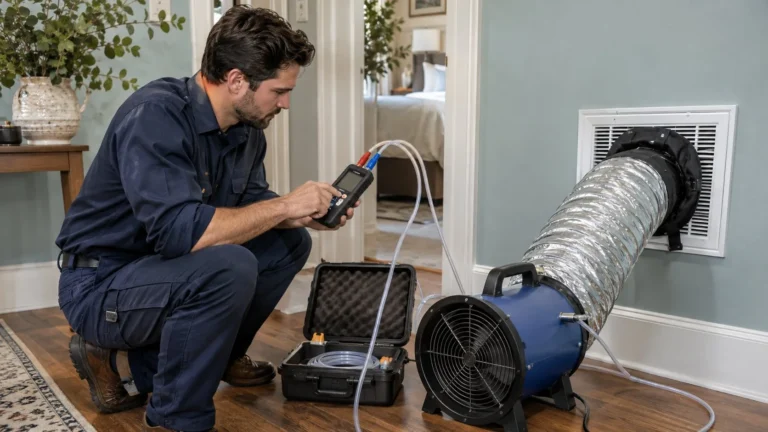
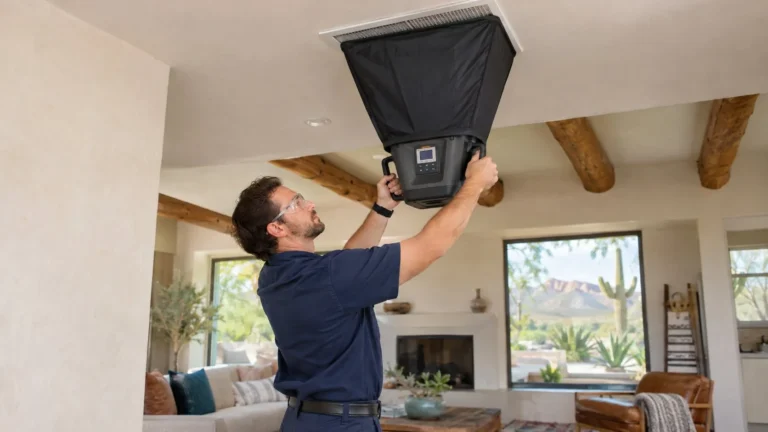
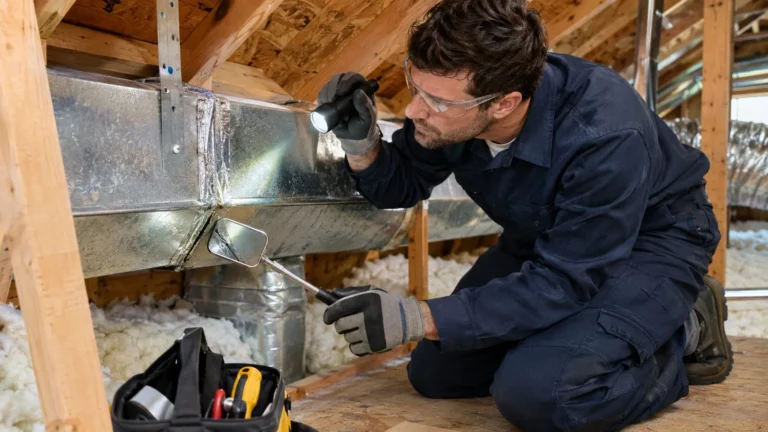
A pressure test costs about $300, with a typical range of $200 to $450 according to Angi, and it tells you how much air the ducts lose. If they are tight, the equipment is the more likely cause. If they are leaky, sealing may fix the problem or reduce the size of the system you need.
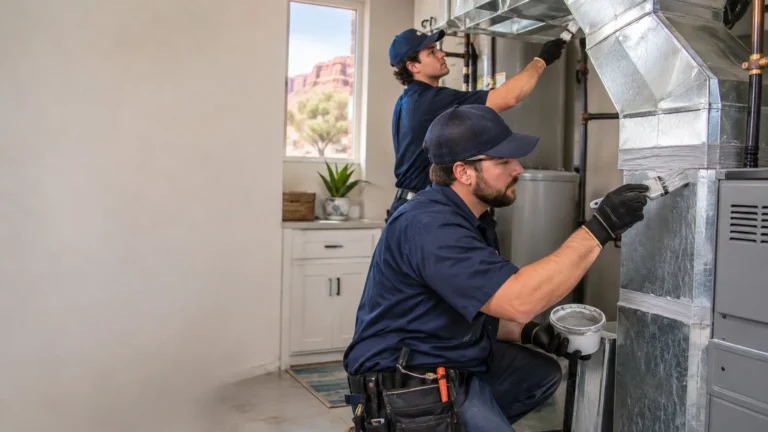
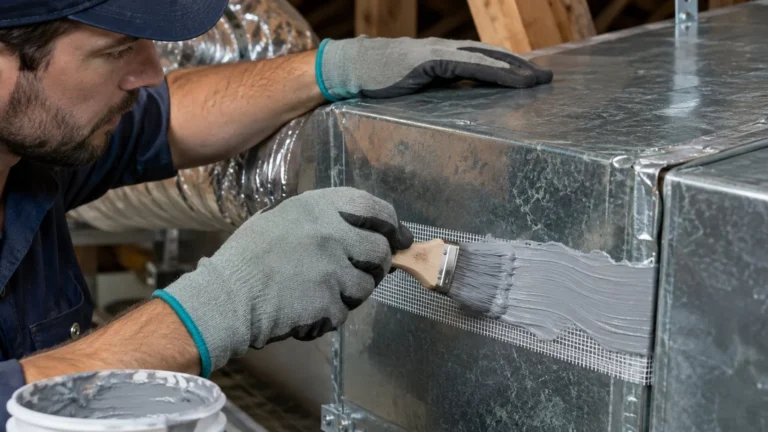
Sealing costs $500 to $4,000, with an average of about $2,250, and most jobs take about 4 hours. NREL found aerosol sealing plus manual patching sealed 70 to 90% of leakage. See duct sealing cost for the breakdown.
Keep the test report. If you do replace the unit later, the report helps the installer size the system and gives you a baseline to compare against after the new unit is running.
A sensible order of operations
- Test the ducts.
- Seal the leaks and retest.
- Judge the equipment against the improved system.
- Replace the unit only if it is still the problem.
Duct sealing vs new AC is not always either-or. A new system on sealed ducts performs better than a new system on leaky ones. Read sealing vs replacement for the ducts themselves, and our payback worksheet to weigh the cost. Duct sealing vs new AC decisions made with test numbers are easier to defend.
Frequently asked questions
Should I seal ducts before buying a new AC?
Testing first is wise. Leaky ducts can waste a new unit’s output.
Do you replace air conditioners?
No. A licensed HVAC technician handles equipment.
How do I know which is the problem?
A duct leakage test shows whether ducts are the cause. A technician diagnoses equipment.
Can sealing reduce the size of unit I need?
It can change what the system needs. Ask your HVAC contractor to size from test data.
Ready to find out where your cool air is going?
Call us and tell us which rooms are giving you trouble. We will explain what a duct leakage test involves and book your duct sealing services St George crews can finish before the next heat wave.
Duct Sealing Pros
3430 S River Rd, St. George, UT 84790
(435) 281-0395