
Utah Energy Code and Duct Leakage
DUCT SEALING PROS · GUIDE
Utah Energy Code Duct Leakage: What Homeowners Should Know
Utah energy code duct leakage rules exist because leaky ducts waste energy, and building codes generally address them through sealing requirements and, in many cases, testing. Code details change between editions and jurisdictions, so confirm the current requirement with your local building department.
Utah energy code duct leakage: the general idea

Energy codes are model documents adopted by states and then enforced locally. They cover insulation, windows, air sealing and mechanical systems, including ducts. Ducts get attention because they can lose a large share of the air an HVAC system produces before it reaches a room.
We do not state which edition applies to your project, because adoption dates and local amendments change. The reliable source is your city or county building department. What follows is the general approach, not a legal reading.
Homeowners often hear about code from a contractor, a real estate agent or an inspector, and the details get mixed up along the way. Treat Utah energy code duct leakage as a question to verify in writing. Ask for the section number, the edition and the testing method, and keep a copy with your permit paperwork.
What codes typically ask for
- Sealed joints: seams and connections sealed with approved materials rather than plain cloth tape.
- Insulation: supply and return ducts in unconditioned spaces such as attics usually need insulation.
- Leakage limits: some projects must meet a maximum leakage figure, shown by a test.
- Documentation: test results or inspection sign-off may be required for permits.
The specifics depend on the project type: new construction, an addition, or a replacement of the system. Existing homes without permit work are usually not forced to meet a leakage figure, but sealing them still saves energy.
How compliance is tested
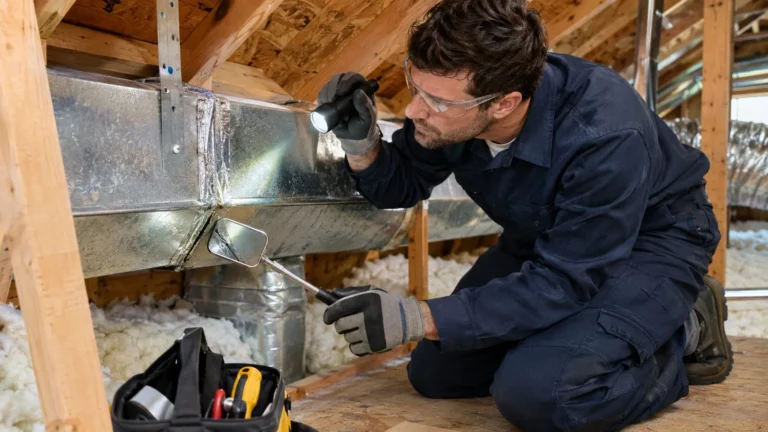
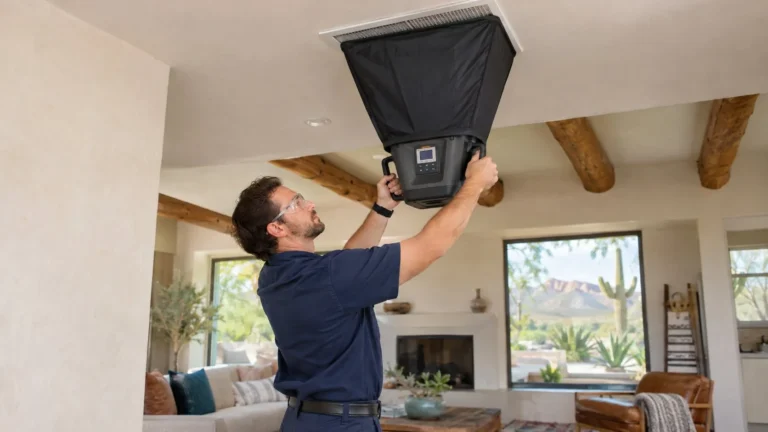
Leakage is measured by pressurizing the duct system and reading how much air escapes. Our page on how duct leakage is tested explains the process, including the difference between total leakage and leakage to the outside.
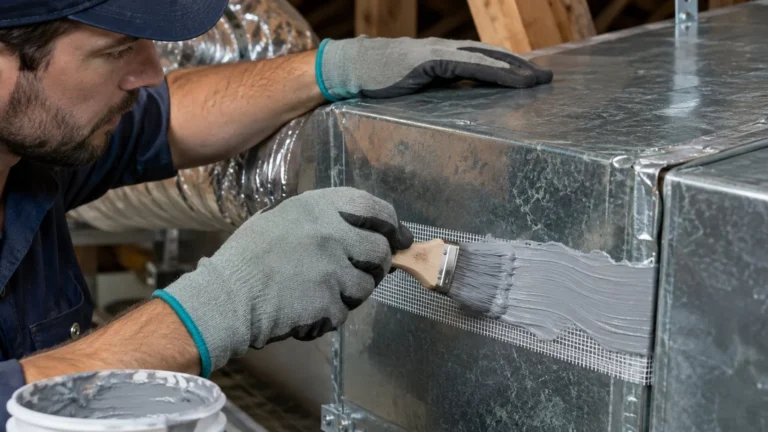
A pass depends on the figure your jurisdiction requires. If the system fails, the fix is sealing the joints with mastic and UL 181B-FX foil tape, then retesting. Utah energy code duct leakage tests are usually done by an HVAC contractor or a third-party rater. For a plain-English summary, see duct sealing for new construction.
Ask for the report itself, not a verbal pass. It should list the test pressure, the measured leakage and the date, and it should be tied to your address. Keep it with your home records, because it helps when you sell and when a later technician needs a baseline for the system.
Why homeowners benefit even when code does not apply
Code minimums are a floor. Research cited by Energy Vanguard from NREL found that ducts in an unconditioned attic can add about 25% to a home’s cooling load. In St. George, where attic air can reach 120°F or more, that is a lot of cooling to waste.
NREL also found that aerosol sealing combined with manual patching sealed 70 to 90% of leakage, compared with 40 to 50% for manual sealing alone. Holes over about ½ inch need hand repair first. That is why a before-and-after test matters even when no inspector asks for one.
Questions to ask before you hire
- Which requirement applies to this project, and who confirmed it?
- Will you test before and after, and give me the numbers?
- What sealing materials will you use?
- Is a permit needed, and who pulls it?
Good answers are specific. If a contractor cannot say how they will prove the result, keep looking. For prices, see duct sealing cost and how to compare duct sealing quotes. We keep Utah energy code duct leakage questions practical: confirm locally, test, seal, retest.
Frequently asked questions
Which energy code edition does Utah use?
Adoption dates and local amendments change. Confirm the current requirement with your local building department.
Do existing homes have to meet a leakage limit?
Usually only when permitted work triggers it. Sealing still saves energy either way.
Who does the testing?
An HVAC contractor or third-party rater, depending on the project and jurisdiction.
Does a pass guarantee savings?
No. A pass shows the ducts meet a figure. Savings depend on the home and system.
Ready to find out where your cool air is going?
Call us and tell us which rooms are giving you trouble. We will explain what a duct leakage test involves and book your duct sealing services St George crews can finish before the next heat wave.
Duct Sealing Pros
3430 S River Rd, St. George, UT 84790
(435) 281-0395