
Desert Dust, Indoor Air Quality and Leaky Ducts
DUCT SEALING PROS · GUIDE
Dust Indoor Air Quality Ducts: How Desert Dust Gets Into Your Home
Dust indoor air quality ducts questions come up often in St. George, where fine desert dust is part of life. Leaky return ducts can pull dusty attic air into the home, so sealing the ducts is one part of reducing what reaches the registers.
Dust indoor air quality ducts in a desert climate

The valley is dry. Humidity is usually under 20%, the area gets only about 8 inches of rain a year, and wind and construction stir up fine dust. Monsoon season, from mid-July to early September, adds dust, afternoon storms and flash floods. Dust is a fact of life, and your ducts are one of the routes it takes into the house.
Air moves through a home in a loop: out through supply ducts, back through returns. Leaks anywhere in that loop change what the system pulls in. A leaky return in the attic pulls attic air, and attic air is dusty.
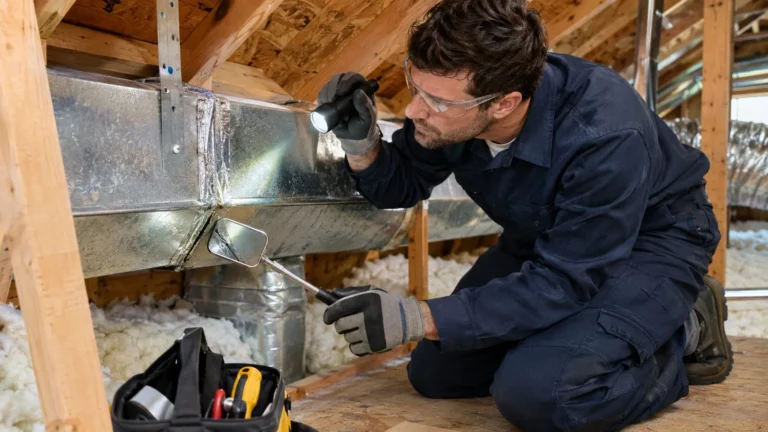
Homes in Washington County often have ducts running through hot attics, and the return side is where dust enters. If your system runs for long stretches in summer, it moves a large volume of air each day, so even a small return leak adds up. Checking dust indoor air quality ducts connections early helps you decide whether a filter upgrade, a test or sealing makes the most sense.
The three paths dust takes
- Through the filter: a clogged or poorly fitted filter lets dust pass.
- Around the filter: a gap at the filter slot lets unfiltered air in.
- Through leaks: leaky returns pull air from the attic or wall cavities, bypassing the filter entirely.
Filters handle the first. A good fit handles the second. Only sealing handles the third, which is why a dusty house leaky ducts problem often survives a filter change. See dust around vents for the symptoms.
What the EPA says about duct cleaning
The EPA has guidance on duct cleaning, and it describes cleaning as appropriate in specific situations such as visible mold, pests or heavy debris. It is not a routine fix. Cleaning does not seal anything, and if the ducts still pull from the attic, dust can return.
That is the reason to measure leakage first. Our guide to sealing, replacing, cleaning and insulating explains how the options fit together. For dust indoor air quality ducts questions, sealing the source often beats cleaning the symptom.
What sealing can and cannot change
| Question | Sealing | Filters and cleaning |
|---|---|---|
| Dust pulled in through leaky returns | Reduces it | Does not stop it |
| Dust passing through the filter | Does not change it | Better filters help |
| Dust from open doors and windows | Does not change it | Cleaning and weatherstripping help |
| Debris already inside the ducts | Does not remove it | Cleaning can, where warranted |
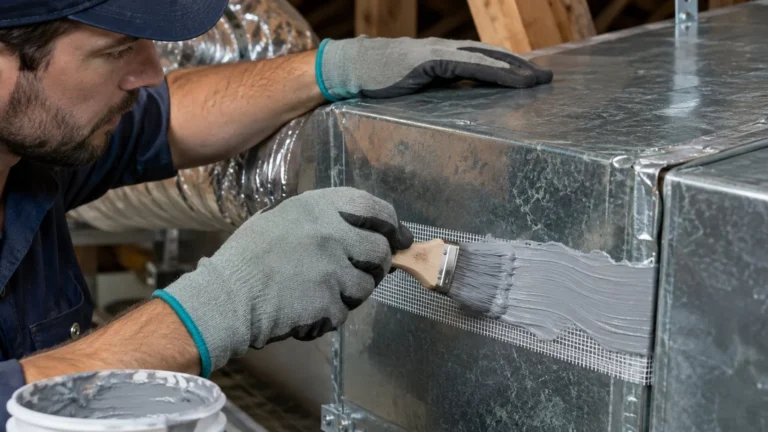
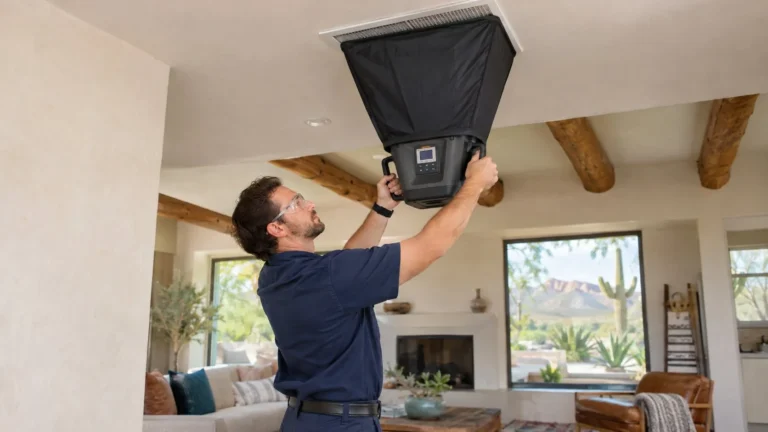
We do not make health claims. We can tell you how much air your ducts lose and where, and seal the leaks with mastic and UL 181B-FX foil tape. A duct leakage test before and after shows the result.
Practical next steps
Change the filter on schedule, check that it fits snugly, and note where dust collects. If dust keeps returning around vents, book a test. A typical sealing job runs 2 to 8 hours, and about 4 hours for most homes, according to Angi. See duct sealing cost for prices. The more you know about dust indoor air quality ducts interactions in your own house, the better the decision.
Keep notes for a week: which rooms get dusty, how often you change the filter, and whether dust seems worse when the system runs. Those observations help a technician target the test. Bring them to the appointment and we will compare them with the measured leakage.
Frequently asked questions
Can leaky ducts cause dust in the house?
Yes. Leaky returns can pull dusty attic air into the system and spread it through the registers.
Will sealing replace my filter?
No. Filters and sealing do different jobs. Sealing reduces dust that bypasses the filter.
Do I need my ducts cleaned?
The EPA describes cleaning as appropriate in specific situations. It does not seal leaks.
Do you make health claims?
No. We measure leakage and seal it. For health concerns, speak with a medical professional.
Ready to find out where your cool air is going?
Call us and tell us which rooms are giving you trouble. We will explain what a duct leakage test involves and book your duct sealing services St George crews can finish before the next heat wave.
Duct Sealing Pros
3430 S River Rd, St. George, UT 84790
(435) 281-0395