
DIY Duct Sealing vs. Hiring a Pro
DUCT SEALING PROS · GUIDE
DIY Duct Sealing: What You Can Do Yourself and What You Cannot
DIY duct sealing can fix some visible leaks, but it cannot tell you how much your ducts leak or find the leaks you cannot see. Here is what a careful homeowner can do, which materials to use and where a pressure test and a professional job make the difference.
What DIY duct sealing can and cannot do
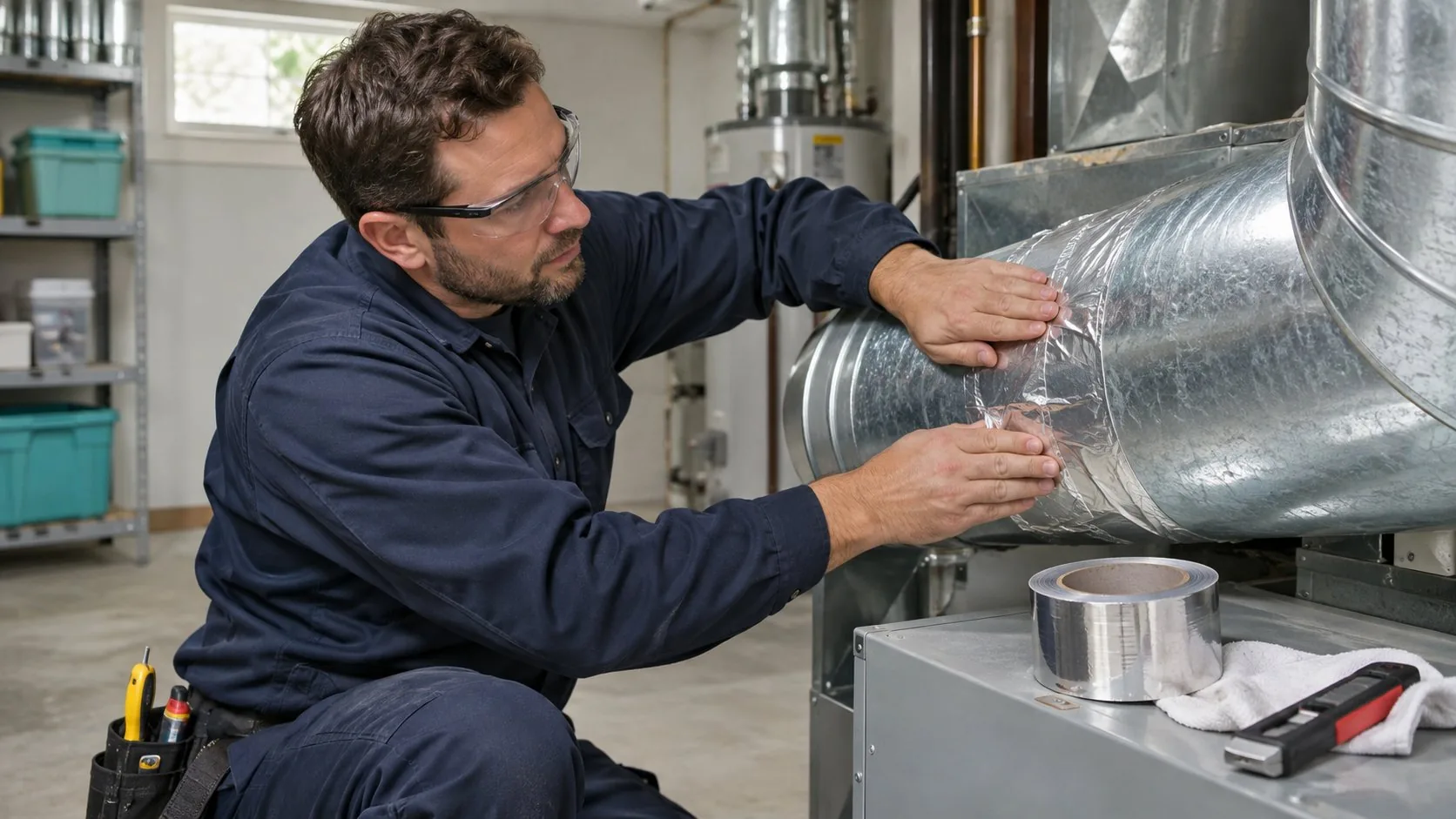
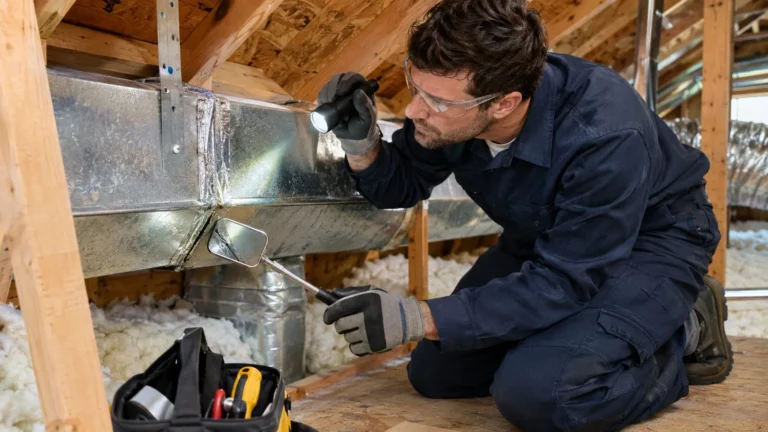
A homeowner with access to the attic can seal visible joints, boots and connections with the right materials. That can help. What a homeowner cannot do without equipment is measure how much the ducts leak, or find leaks inside walls and ceilings. DIY duct sealing works on what you can see, and a lot of leakage is hidden.
| Task | DIY | Needs a professional |
|---|---|---|
| Replace the filter, check registers | Yes | No |
| Seal visible attic joints with mastic | Possible | Better with a test |
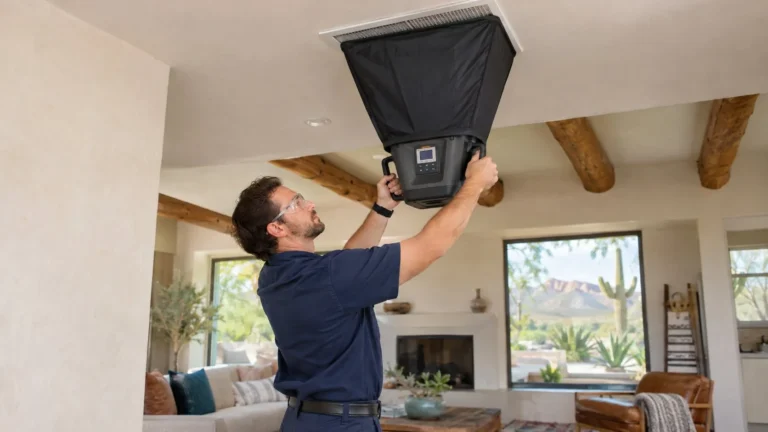
| Measure total leakage | No | Yes, with a pressure test |
| Seal hidden leaks | No | Yes, often with aerosol |
| Repair crushed or disconnected duct | Sometimes | Often repair |
The honest summary is that DIY duct sealing is limited by what you can see and measure. Everything beyond that needs tools.
The right materials, the wrong ones
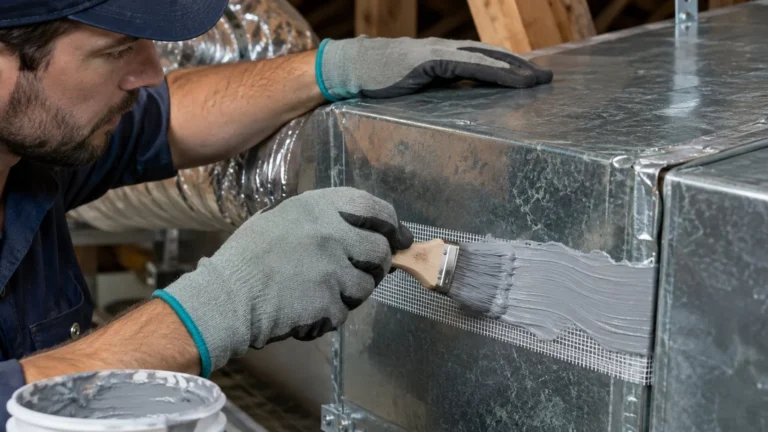
If you do seal ducts yourself, use mastic on metal joints and UL 181B-FX foil tape on flexible duct connections. Never use cloth duct tape. In an attic that can reach 120°F or higher on a sunny day, cloth tape heats up, cools down and lets go. Mastic needs to be applied thick enough that it will not crack.
See our mastic and foil tape page for where each goes.
The risks of working in a hot attic
- Attic air can reach 120°F or higher in summer, which is dangerous for long work.
- Footing is limited to joists. Stepping between them can mean a fall through the ceiling.
- Insulation, wiring and sharp duct edges are hazards.
- Spring and fall are safer times to work than midsummer.
If you go up, tell someone, take water and limit your time. For many homeowners, this alone is the reason to hire the job out.
When a pro is worth it
A pressure test is the main reason. It gives you a baseline number and a result you can check. Angi lists a pressure test at about $300, with a range of $200 to $450, and duct sealing at $500 to $4,000 nationally. NREL found manual sealing alone sealed 40 to 50% of leakage, while aerosol plus manual patching sealed 70 to 90%.
That gap is what you are paying for when you hire out the job. See duct sealing cost and duct leakage testing. DIY duct sealing is a reasonable first step for accessible joints, but only a test shows how much is left.
A sensible middle path
Do the easy things yourself: change the filter, open and clear the registers, and note which rooms run hot or cold and when. If you are comfortable and safe in the attic, look for obvious problems such as disconnected duct or tape hanging off a joint. Then book a pressure test to learn how much leakage remains.
That way, you pay for the part that needs equipment and skip the part that does not. If the test shows your ducts are tight, you have saved money. If it shows high leakage, you have a number to justify a professional job, and you will have a baseline to compare against. DIY duct sealing and a test are a good combination.
Frequently asked questions
Is DIY duct sealing worth trying?
For visible, accessible joints it can help. Without a test you cannot tell how much it helped or how much leakage remains.
Can I use duct tape?
Not cloth duct tape. Use mastic on metal and UL 181B-FX foil tape on flexible duct connections.
Is attic work dangerous?
It can be. Attic air can reach 120°F or higher in summer. Spring and fall are safer.
How do I know if I need a pro?
A pressure test tells you how leaky the ducts are. If leakage is high or the leaks are hidden, a professional job is worth it.
Ready to find out where your cool air is going?
Call us and tell us which rooms are giving you trouble. We will explain what a duct leakage test involves and book your duct sealing services St George crews can finish before the next heat wave.
Duct Sealing Pros
3430 S River Rd, St. George, UT 84790
(435) 281-0395